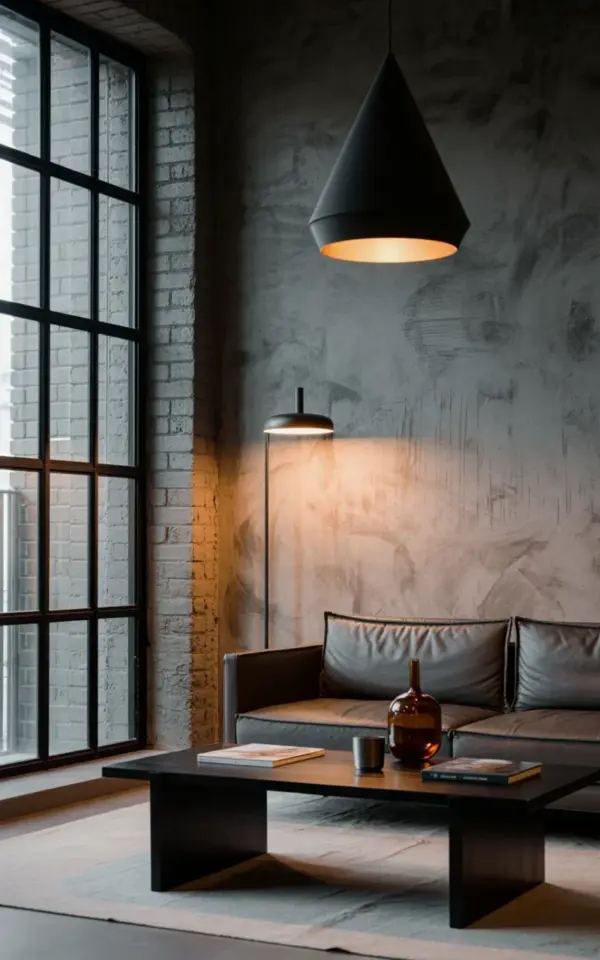
There is a particular kind of quiet that settles over an industrial living room when the sun starts to angle through the glass. On the left, a floor-to-ceiling window framed in black steel pulls the outside in, while textured concrete walls in weathered gray keep the room grounded. It sounds austere on paper. In person, or even in a single well-lit photograph, it feels like a place you want to curl up in.
Why Concrete Walls Do Not Have to Read Cold
Concrete gets a bad reputation in interior conversations. People imagine a damp basement or an empty warehouse, but that usually comes down to lighting and texture, not the material itself.
Here, the walls carry a distressed, weathered finish. Every mark and slight variation in tone gives the space depth, so the room never feels flat or sterile. That is the difference between a concrete wall that works and one that reads like a parking garage.
If you want the look at home, skip the smooth polished concrete and ask for a board-formed or hand-troweled finish. The imperfections are what make it feel human.
The Floor-to-Ceiling Window Is the Real Artwork
With walls this strong, you need one dominant feature to balance them. The black metal window on the left handles that job effortlessly.
Floor-to-ceiling glazing does more than bring in natural light. It changes with the time of day, casting long shadows in the afternoon and turning into a dark mirror after sunset. The black frame also picks up the black pendant light, which ties the whole composition together.
If you are working with an existing window that is not quite this grand, paint the frames a matte black. It instantly adds that industrial loft character without a renovation.
The Black Pendant Light That Sets the Whole Mood
Now we get to the unsung hero of this room. A single black cone-shaped pendant light hangs from the ceiling, low enough to feel intimate but high enough to avoid blocking the view.
The warm bulb inside casts a soft glow directly onto the textured concrete wall below. That small pool of light is what makes the room feel cozy instead of cavernous at night.
This is where many industrial decor attempts go wrong. People install bright, cool-toned recessed lights and wonder why the concrete looks harsh. Skip that. Choose one or two statement pendants with warm bulbs and let them do the work.
A dimmer switch is non-negotiable if you want this effect at home, since it lets you drop from bright morning energy to evening calm.
Low Furniture Keeps the Loft Feeling Open
The furniture in this room is selected with restraint. The dark gray sofa has clean, straight lines and sits against the window. It is low to the ground, which keeps the eye moving up toward the ceiling and the light.
In front of it, a low-profile wooden coffee table adds the one warm material the room needs. Wood against concrete is a classic loft decor pairing because the two materials soften each other. The table’s light oak tone also prevents the gray palette from feeling monotonous.
Notice what is missing: bulky armchairs, oversized shelving, clutter. In an industrial living room, negative space is a feature.
Seasonal Shifts: Making This Room Feel Right in Fall and Winter
This is the season where this living room really earns its keep. As temperatures drop, the warm glow from the pendant light becomes the focal point, and the dark tones of the walls and sofa feel like a hug rather than a mood.
The trend this year is toward “warm brutalism,” which sounds like a contradiction until you see a space like this. The idea is to keep the raw concrete and steel, then layer in soft textures and warm light. It is a reaction against the all-white minimalist look that dominated the last decade.
For autumn, swap in a chunky wool throw and a couple of rust or ochre cushions on the sofa. Add a low pile rug
Leave a Comment