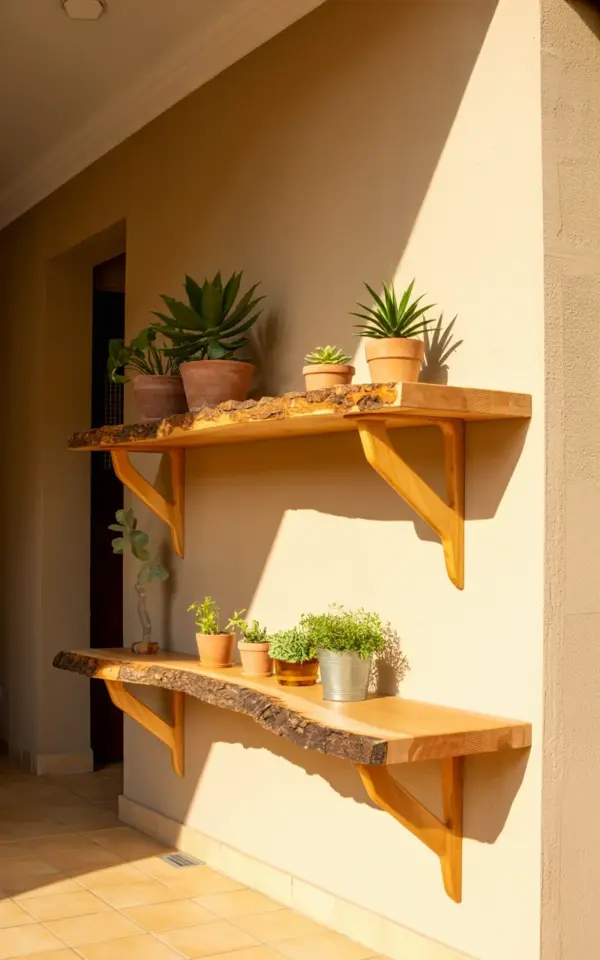
If you have ever tried to blend industrial decor with organic wood and greenery, you already know the struggle. That beautiful live-edge shelf you fell in love with can look awkward instead of effortless, and your carefully chosen plants might seem out of place rather than curated. I have seen this happen in dozens of loft apartments, and the photo of two sunburst-shaped live-edge shelves on a beige wall, holding a large agave, succulents in terracotta pots, and a row of herbs, is exactly the kind of setup that gets it right. But getting there requires sidestepping a few common mistakes. Let me walk you through them so you can create a display that feels intentional, warm, and truly industrial.
Mistake #1: Choosing the Wrong Wood Species for Live-Edges
The organic, flowing edges of live-edge wood are what make this style stand out. But not all wood species behave the same way when mounted on a wall, especially in a loft with fluctuating humidity. Many people pick pine or poplar because they are cheap, only to watch the shelf warp or crack after a few months. That wrecks the whole look.
For a pair of sunburst-style shelves like the ones in the photo, go with walnut, oak, or reclaimed teak. These woods have tighter grains and natural resistance to movement. They also carry a richer color that contrasts beautifully with a beige wall. The natural sunlight that filters through your loft will darken some species over time, which can actually enhance the live-edge texture if you choose a wood that ages gracefully.
- Best woods for stability: walnut, white oak, cherry, teak
- Woods to avoid: pine, poplar, birch (unless perfectly sealed)
- Always seal properly: use a matte polyurethane or hard wax oil to protect the edges without making them shiny
Mistake #2: Misjudging the Sunburst Shape Placement
The sunburst pattern in the example photo is not just decorative; it changes how the shelves interact with the wall. If you mount two shelves with sunburst shapes too close together, they compete for attention and the organic flow feels cramped. I often see people hang them at eye level, thinking symmetry is the answer, but that flattens the depth.
Instead, place the top shelf a few inches above natural eye level and the bottom shelf lower than you think. That creates a staggered line of sight, which complements the irregular edges of the wood. The agave on the top shelf should feel like it is reaching upward, while the herbs below stay grounded. Leave at least 12 to 16 inches of vertical space between the two shelves so each plant grouping has its own breathing room.
Mistake #3: Overcrowding Your Plant Display
In the photo, the top shelf holds a large agave plus a few small succulents in terracotta pots, and the bottom shelf has several herbs. That is a tight edit. But when people first set up a plant display, they often pack every inch of the shelf with pots, turning the wall into a messy nursery. The live-edge wood becomes an afterthought.
The rule of thumb is to leave about 30 percent of each shelf surface visible. Let the wood speak. On the top shelf, one statement plant like that agave can anchor the whole composition, with two or three smaller succulents placed off to one side. On the bottom shelf, group herbs by size rather than spacing them evenly. Clusters feel deliberate; equal spacing feels like a shelf in a greenhouse. Remember that natural sunlight will highlight the wood grain, so do not block it with a forest of foliage.
Mistake #4: Forgetting to Anchor Shelves Properly in Loft Walls
Loft apartments often have concrete or brick walls behind the drywall, or old plaster over lath. Standard drywall anchors simply will not hold a live-edge shelf loaded with plants and soil. I have seen shelves tear right out, damaging both the wall and the plants. That is a heartbreaker.
Before you mount anything, check what is behind your beige wall. For concrete or brick, use masonry anchors and a hammer drill. For plaster, toggle bolts are your best friend. The sunburst shape of the shelf in the photo likely has multiple mounting points, so use every single bracket or screw hole provided. If your shelf is custom, add at least two hidden brackets per shelf, one near each end. A heavy agave in a terracotta pot can weigh several pounds, and wet soil adds even more load. Do not guess. Drill test holes if you have to.
Mistake #5: Ignoring the Direction of Natural Sunlight
The photo shows natural sunlight hitting the wood edges, making them glow. That is not an accident. But many people install live-edge shelves on a wall that faces north or gets only indirect light, then wonder why their succulents stretch and their herbs get leggy. The sunburst pattern itself can cast interesting shadows, but the plants need the right exposure to thrive.
Agave and
#IndustrialDecor #LiveEdgeShelves #PlantDisplay #LoftApartment #WoodShelves
Leave a Comment