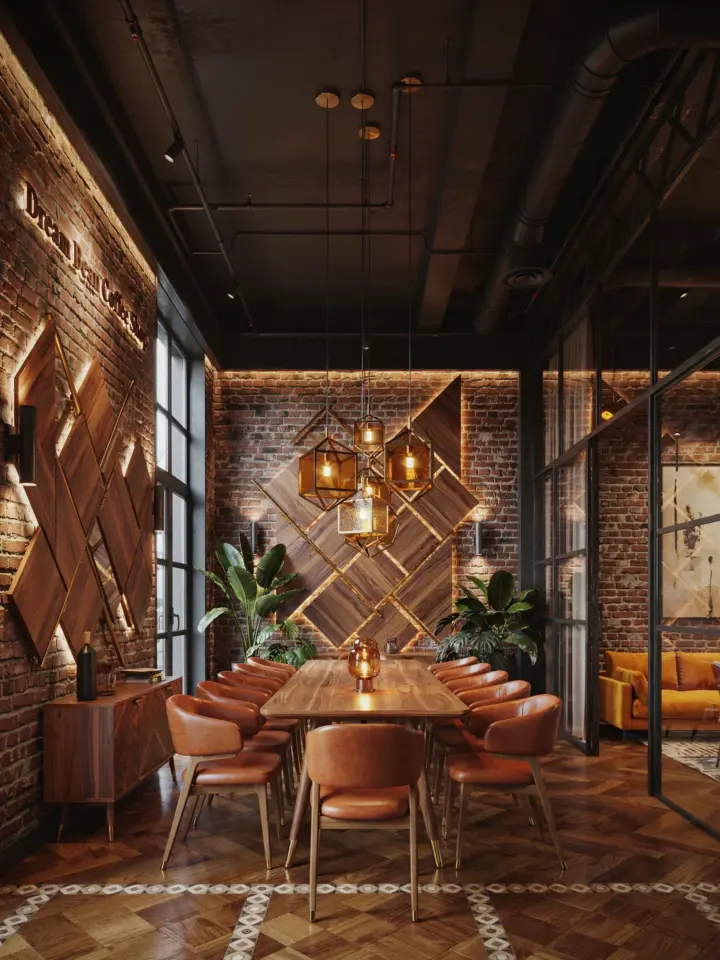
Alright, so here’s the thing. I spent three months helping a friend turn an old factory space into a coffee shop, and the industrial decor ideas we tried taught me more than any Pinterest board ever could. The place had cracked concrete floors, a leaky skylight, and one wall of brick that looked like it had survived a war. Honestly, it was perfect. If you want that factory loft coffee shop vibe, you don’t need to buy a single fake-rusty sign. You need to work with what’s already there. Let me tell you what actually worked.
Start With the Floor Plan: Let the Factory Do the Talking
We made a huge mistake at first. We tried to cover everything up. We wanted it cozy, so we brought in rugs, fake plants, and soft curtains. It looked like a dentist’s waiting room that got lost in an industrial park. Then we tore all that out. What worked was leaving the center of the room wide open, with the old machinery tracks still visible on the concrete. Customers naturally gravitated toward those lines. We just placed the tables along them. That’s how you get that factory loft feel without forcing it.
The layout matters more than any single piece of furniture. Think about how the original building moved goods. That’s your main walkway. Put the espresso bar where the old loading dock used to be. Keep the seating along the walls, in those little bays where machines once sat. You’ll find people love sitting in weird nooks that feel like they have history. And you don’t need to explain any of it. They just feel it.
Exposed Brick and Black Steel: The Non-Negotiables
Look, exposed brick is not a trend. It’s a structural fact. When the landlord said we could paint it, I said no. And I’m glad I did. That rough, orange-brown brick gave the space all its warmth. The black steel came next. We used simple, uncoated steel pipes for the shelving and the counter frame. They cost less than wood, and they looked ten times more original. One trick: don’t polish the steel. Leave the welds visible. Let the angles be a little rough.
But here’s the real advice. Use steel sparingly. If you cover every wall with it, your coffee shop looks like a hardware store. We used steel for the legs of the tables, for the bar front, and for one long shelf behind the register. That’s it. The brick does the heavy lifting. The steel just keeps it grounded. And yes, you can mix bare metal with warm wood. That’s the whole secret of industrial decor. The contrast is what makes it feel designed, not just abandoned.
Reclaimed Wood: The Warm Counterweight to All That Cold Steel
You cannot have a factory loft coffee shop without some serious wood. But not the shiny, perfect oak that your grandma’s dresser was made of. We’re talking old barn wood, shipping pallets, or in our case, the original floorboards of the factory’s second story. The owner had a guy who ripped out those boards during a renovation. We planed them down just enough to avoid splinters, then used them for the countertops and the community table. They were full of nail holes and paint splatters. People loved it.
Reclaimed wood is also the thing that stops industrial decor from feeling cold. We put a thick slab of it on the serving counter. That’s where the barista sets down your latte. It catches the light, it absorbs the coffee rings, and it just gets better with time. One thing I learned: don’t seal it with a glossy polyurethane. Use a matte, food-safe oil instead. That way the wood stays rough and touchable. You want people to run their fingers over the grooves while they wait for their order.
Lighting: Edison Bulbs and the Art of Shadows
Ok so this is where most people go wrong. They buy those little vintage Edison bulbs and hang them from a single wire, and it looks like a craft fair. We did something different. We hung long, bare steel pendants at different heights, each with a single warm Edison bulb. The trick is to space them unevenly. Three over the bar, four over the big table, two near the window. Not a perfect row. That unevenness creates pockets of light and dark, which is exactly what an old factory feels like.
Also, don’t turn on all the lights at once. We wired the fixtures onto separate switches. In the morning we only used the bulbs near the front. In the afternoon we turned on the ones over the back seating. That’s how you get that moody, industrial glow without making everything dim. And use the bulbs with the filament that looks like a tiny zigzag. They give off this soft amber color that makes everyone look good. No harsh white light. Ever. People come for the coffee, but they stay for the shadows.
Bare Ceilings and the Stuff You Should Not Touch
I cannot stress this enough. Do not cover the ceiling. No drop tiles, no wood planks, no acoustic panels. Leave the ductwork, the pipes, the electrical conduit, all of it exposed. We had one section where the old insulation was hanging down like sad cotton candy. We cleaned it up and left the rest. The customers loved it. They would point up and say, “Is that original?” And we’d say, “Mostly.” The key is to paint everything on the ceiling a single flat color. We used a dark charcoal gray. That made the rusty pipes and the new black steel fixtures blend together into one continuous shape.
You know what else you should not touch? The floor. We had these weird oil stains from old machinery. We thought about grinding them out, but a friend said to leave them. She was right. We just sealed the concrete with a matte finish. Now those stains are part of the charm. People take photos of them. If you own a factory loft coffee shop, you have to let the building be a little ugly. That ugliness is the authenticity. And you can’t buy that in a catalog.
Layering Textures Without Overthinking It
Here’s the thing about industrial decor. It’s not about matching. It’s about piling things that feel real. Our final texture mix went like this:
– Rough concrete floors underfoot
– Smooth, cool steel on the bar rails and table legs
– Warm, nubby reclaimed wood on every surface you touch
– Soft, worn leather on the bench cushions
– Woven canvas curtains so thin they barely filter the light
– One single Persian rug, completely out of place, right under the community table
That rug was my weird choice. Everyone told me it would ruin the vibe. But it didn’t. It broke the monotony of all that gray and brown. It gave the room a little softness right where people sit. So don’t be afraid to throw in one thing that doesn’t fit. That’s the difference between a designed space and a decorated one.
Also, don’t stress about the exact shade of each material. Just make sure the texture changes every few feet. If a wall is smooth brick, put a rough metal stool next to it. If a counter is glossy from spilled milk, put a matte ceramic mug on it. It’s less about rules and more about making your eyes move around the room. Honestly, the easiest way to test it is to walk through at dusk. Turn off all the lights. Turn on just the Edison bulbs. If the space feels like it’s been there for a hundred years, you’re done.
Small Details That Save the Whole Vibe
One thing I see so often is people spending all their money on the big furniture, then buying cheap plastic cups. That kills it. We used thick, heavy glass mugs and ceramic bowls. They felt like something a factory worker would drink from. We also used metal scoopers for the sugar and the coffee beans. Not the shiny ones. The matte, slightly scratched ones. And we hung a single chalkboard menu on a steel frame. No digital screens. No printed signs. The chalkboard makes the menu feel temporary, like it’s just for today.
Another small thing that worked: we left one old machine part on a shelf near the door. It was a gear from the original conveyor belt. We didn’t label it. People would pick it up, turn it over, then put it back. It started conversations between strangers. That’s exactly what a coffee shop wants. So look around your building. Find one weird artifact that nobody else has. Put it where people can touch it. That’s better than any neon sign.
So yeah, that’s what actually worked for us. The factory loft coffee shop aesthetic is less about buying things and more about noticing what’s already there. Start with the building’s raw bones. Add steel and wood. Keep the ceiling bare. Then let the light and the little worn details do their job. There’s no secret formula. Just layer textures until it feels honest. And if you’re working on your own space, I’d love to hear what weird thing you end up leaving in plain sight. Go make something real.
#industrialdecor #factoryloft #coffeeshopideas #loftstyle #industrialdesign
Leave a Comment