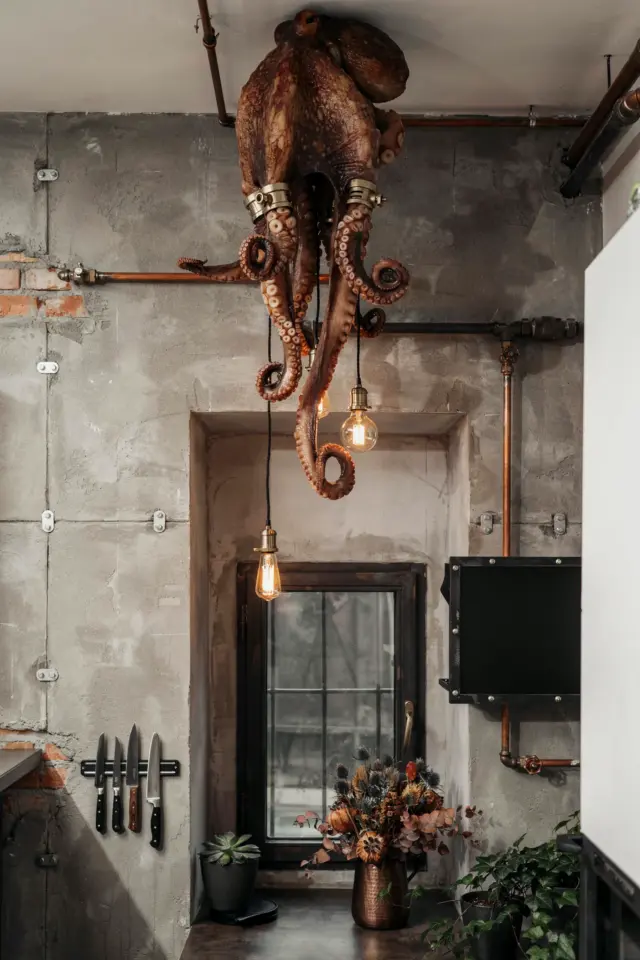
If you have ever wanted a lighting fixture that feels like it crawled out of an H.P. Lovecraft novel and landed in your living room, the Steampunk Octopus Chandelier is exactly that. This thing is a statement piece, not a subtle accent. With twisting tentacle arms, aged brass finishes, and exposed Edison bulbs, it brings a Victorian-meets-industrial vibe that works beautifully in a gothic reading nook, a steampunk workshop, or even a dark, moody dining room. But before you click “add to cart,” there are a few practical things to consider. This guide walks you through the real steps of buying, installing, and styling one of these Kraken-inspired fixtures so you don’t end up with a heavy, odd-shaped lump of metal that doesn’t fit your space.
Choosing the Right Octopus Chandelier for Your Room Size
Not all octopus chandeliers are the same. Some have six arms, others have eight or even ten. The tentacles can spread anywhere from 30 inches to over five feet across. Before you buy, measure your ceiling height and the diameter of the room. A chandelier that is too wide for a small den will overwhelm the space, and one with arms pointing in every direction might hit people’s heads if hung too low.
For a standard 8-foot ceiling, look for a fixture with a total width of 28 to 36 inches. For taller ceilings, you can go bigger. Also check the drop length: many steampunk octopus chandeliers come with adjustable chains or rods, so you can set the bottom of the fixture at about 7 feet above the floor. If you are placing it over a table, aim for 30 to 36 inches above the tabletop.
- Measure ceiling height first. Subtract 7 feet for clearance, and see how much room you have for the fixture itself.
- Check arm spread in the product description. Look for “total width” or “diameter.”
- Consider the bulb count. More arms mean more light, but also more weight. See the next heading.
Where to Place Lovecraft Kraken Lighting in Your Home
Because this is not a typical drum shade or flush mount, placement matters. The best spots are areas where the sculptural quality can be seen from multiple angles. A stairwell landing, a corner of a library, or above a console table in a hallway all work well. I have seen one hung over a clawfoot bathtub in a steampunk bathroom, and it looked fantastic (just make sure it is rated for damp locations if you do that).
Avoid placing it in a very bright, white room with lots of modern furniture. The contrast can work, but usually the chandelier looks best against dark walls, exposed brick, or weathered wood. If your space is already full of chrome and glass, this fixture might feel out of place. Instead, lean into the industrial gothic style: think leather, wrought iron, and deep jewel tones.
Matching Kraken Lighting with Industrial Decor Elements
This chandelier is a focal point, so everything else in the room should support it without competing. Start with the metal finishes. Most octopus chandeliers use brass, copper, or gunmetal. Pick one of those as your accent metal for other items, like lamp bases, drawer pulls, or picture frames. Do not mix in shiny nickel or polished chrome; it will clash.
For walls, consider dark matte paint (charcoal, navy, or deep green) or reclaimed brick veneer. Furniture should have clean lines but visible wear: a distressed leather sofa, a steel pipe shelving unit, a reclaimed wood coffee table. Add some vintage science or nautical prints on the walls to reinforce the Lovecraftian feel. And do not forget the bulbs. Those exposed Edison bulbs are part of the look. Choose ones with a warm amber glow (around 2200K to 2700K) and visible filaments. Avoid cool white LEDs.
Practical Installation Tips for Heavy Tentacle Chandeliers
These things are heavy. A medium-sized steampunk octopus chandelier can weigh 15 to 25 pounds, and larger ones go over 40 pounds. That means you cannot hang it from a standard plastic ceiling box. You need a ceiling fan-rated electrical box, the kind that is screwed into a joist or has a heavy-duty brace. If you are not comfortable doing this yourself, hire a licensed electrician. It costs a bit but saves you from a very expensive crash.
Another tip: have a helper. Tentacle arms are awkward to maneuver, and trying to balance the chandelier while connecting wires alone is frustrating. You want one person holding the fixture and the other connecting the wires and attaching the mounting plate. Also, some chandeliers come with pre-wired arms, but others require you to thread wiring through the arms yourself. Read the assembly instructions before you start, and give yourself two hours for installation.
Maintaining Brass Finishes and Intricate Metalwork
Brass and copper patina over time. Some people love that aged look, but if you want to keep the chandelier shiny, you will need to dust it regularly. Use a soft microfiber cloth, not a rough rag that can scratch the patina. A mild brass cleaner (like Brasso) can be used once or twice a year, but test it on a hidden arm first because some finishes are lacquered and should not be polished.
The tentacles themselves often have small crevices and overlapping metal scales. Dust builds up in those areas fast.
#SteampunkDecor #OctopusChandelier #Lovecraft #KrakenLighting #IndustrialHome
Leave a Comment